How to Build a Golf Practice Plan That Lowers Your Scores
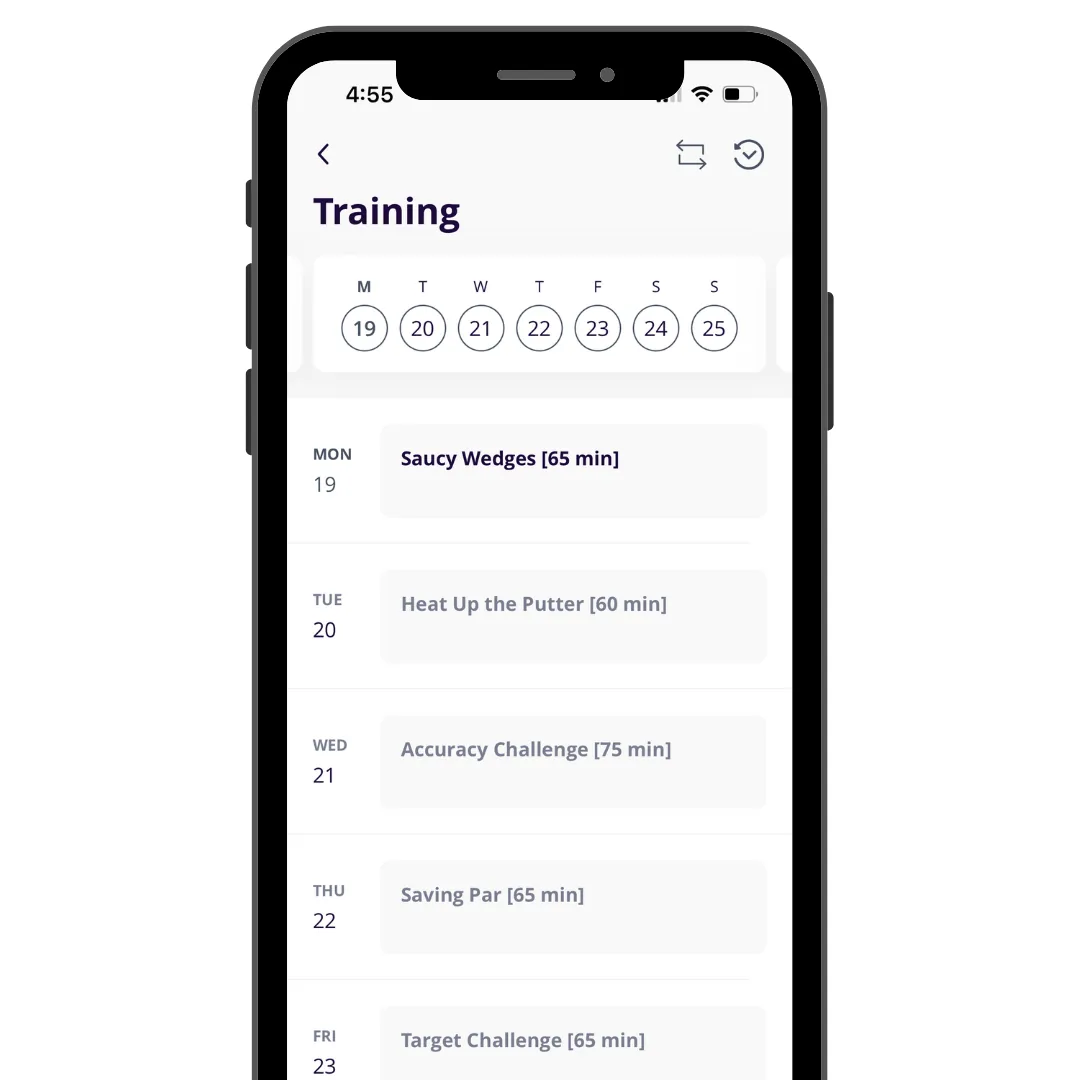
Most golfers practice the same way every time: grab a bucket, hit drivers until it feels good, maybe a few chips. That's not practice, it's a warm-up with no round attached. A golf practice plan answers three questions before you leave the house: what am I working on, how much, and how will I know if it worked?
Here's how to build one in five steps, plus ready-made plans if you'd rather start today.
Step 1: Find where you're losing strokes
Before you plan practice, look at your last five rounds. If you don't track stats yet, start with these four per round:
| Stat | What it tells you |
|---|---|
| Fairways hit | Whether the tee shot is putting you in trouble |
| Greens in regulation | Approach and iron play |
| Up-and-downs | Short game around the green |
| Putts | Speed control and short putts |
Look for the one or two numbers that stand out. A golfer averaging 38 putts and a golfer losing two balls a round need completely different weeks. Not sure how to read it? Our post on tracking golf stats walks through it.
Step 2: Set a realistic weekly schedule
Be honest about time. A plan you can't keep is worse than no plan. Pick the number of sessions you can actually do, and how long:
| You have | Try this |
|---|---|
| 1 session a week | One 1-hour session, rotating the focus each week |
| 2 sessions a week | One short game and putting day, one full-swing day |
| 3–4 sessions a week | The 4-day sample plan |
| 30 minutes at a time | The 30-minute practice plan |
Step 3: Split your time by where scores are made
Most of the shots in a round happen within 100 yards of the hole. A good default split:
- About 50%: short game and putting
- About 30%: wedges and approach shots
- About 20%: driver and long clubs
Then move time toward your weakest stat from Step 1. If you're breaking 90 for the first time, the split looks different again. See the break 90 plan and the break 80 plan.
Step 4: Score every session
Every drill needs a number: makes out of 24, shots inside 6 feet, longest fairway streak. Write it down. Scores do two things: they add a little pressure, which makes practice more like the course, and they show you whether you're improving. Every session we publish comes with a scorecard for this reason.
Step 5: Review and adjust every two weeks
Compare your practice scores and your round stats every two weeks. If your up-and-down rate is climbing, keep going. If a number hasn't moved in a month, change the drill, not the goal.
Ready-made plans
| Plan | Best for |
|---|---|
| Free 4-day sample plan | A balanced week, any level |
| Printable practice plan PDF | Taking it to the range |
| Break 90 practice plan | Golfers shooting 90–100 |
| Break 80 practice plan | Golfers shooting 80–89 |
| 30-minute practice plan | Busy weeks |
| Putting practice routine | Too many three-putts |
| Winter practice plan | Off-season, indoors, simulators |
| High school golf practice plan | Coaches and teams |
The part a plan can't do on its own
Steps 1 and 5 are where most golfers get stuck. Reading your own stats honestly is hard, and so is knowing which drill fixes which problem. With Under Par Full Access, a coach builds the plan from your stats, reviews every session and changes it as your scores change. Full Access is currently full; the App Plan gives you structured practice and fitness plans from $39/month.
Common questions
How often should I practice golf?
Two focused sessions a week plus one round will move most golfers forward. Consistency matters more than volume: two scored sessions beat five buckets of drivers.
How should I split my practice time?
Start with about half on short game and putting, a third on wedges and approach shots, and the rest on driver and long irons. Then shift time toward whatever your stats say is costing you the most.
Is there a golf practice plan PDF?
Yes. Our free printable practice plan has four scored sessions covering full swing, wedges, short game and putting.